

October 28, 2026 · 5 min read
The App Store Can Wait: Shipping a Mobile Beta as a Direct Download
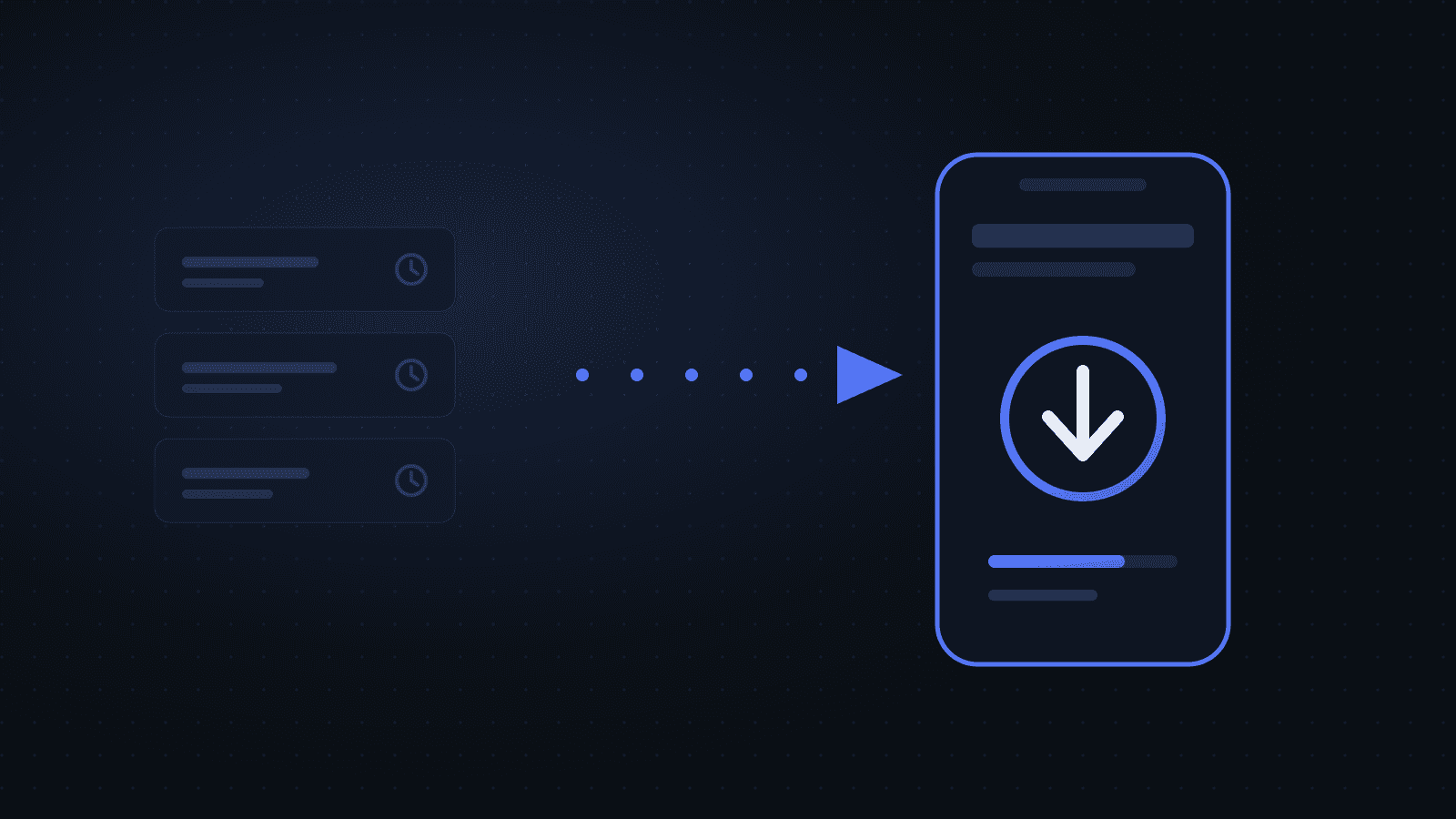
There's a moment in every mobile build where the software is ready for its first real users and the founder discovers that the distribution channel is not. The app stores — the thing everyone assumes is "how you ship mobile" — turn out to be a queue, a review policy, a developer-account verification flow, and a tester-management console, all standing between a working build and the ten people who actually asked to use it. This post is about the option most teams forget they have: for a private beta, you can just hand people the app.
Not forever. Not for launch. For the phase where feedback matters more than reach — which is exactly the phase most early products are in far longer than they admit.
What a private beta is actually for
A private beta has one job: close the loop between "we built it" and "they used it" as fast as possible, with people who have agreed to tell you the truth. Nobody is discovering your product in a store search at this stage. Your first users come from a conversation — a design partner, a pilot customer, a clinician or operator who said "show me." They don't need a storefront. They need the build.
That reframes the question. The store's superpowers — discovery, trust signals, frictionless install at scale — are launch-phase assets. In a beta, the asset that matters is iteration speed: how many hours pass between "this screen confuses me" and the corrected build landing on the same phone.
The queue between you and your testers
Every store-mediated channel adds latency and ceremony to that loop. Review times are better than they used to be, but they are not zero, they are not guaranteed, and they are not yours to control — a build can sail through on Monday and get held on Thursday for a metadata question. Tester management has its own friction: invitation flows, account requirements, testing tracks, and policies that change under you. None of it is malicious. All of it is overhead designed for a marketplace of millions, applied to your audience of ten.
The cost isn't just calendar time. It's that the overhead quietly changes your behavior. When shipping a build costs a review cycle, you batch changes. When you batch changes, feedback arrives weeks after the decision it should have informed — the same drift we've written about in the weekly demo, wearing a mobile costume. The cadence that keeps a build honest needs a channel that can keep up with it.
The unreasonably simple option
On Android, that channel has existed all along: build a release APK, host the file, put the link where your testers already are. We do this for PrefPal, our surgical preference-card platform — the Android beta is a direct download on the product page. A design partner taps the link on their phone, Android asks once whether to allow installs from the browser, and thirty seconds later they're looking at the current build. Shipping an update is uploading a file.
What this buys you in the beta phase:
- Your release cycle is your own. The gap between fixing something and a tester holding the fix is however long your build takes — not your build plus a review queue.
- One link, no ceremony. No tester lists to administer, no invitation emails bouncing, no "which email is your store account under?" Every onboarding conversation gets shorter.
- The link lives in your funnel. A download on your own product page sits next to your pitch, your FAQ, and your contact form — so the beta is part of the sales motion, not a separate artifact.
Honesty requires the asterisk: this is an Android story. iOS has no equivalent path for external testers — Apple's TestFlight is effectively the floor, and it's a good tool; it just puts you back in a review-shaped line. One more reason the Android build is often the right first beta surface, even when the roadmap is both platforms.
What you give up, and what to get right
Direct distribution is a beta tool, not a launch strategy, and it comes with real trade-offs you should handle on day one rather than discover later:
- No auto-updates. The store's silent background update is the feature you'll miss most. Mitigate it: version the filename, show the running version in the app, and tell testers when a build is stale — or build an update check into the app itself.
- Install friction is real, once. The "allow installs from this source" prompt reads as scary to non-technical users. A one-line note next to the download link ("Android will ask you to allow the install — that's expected") removes most of the hesitation.
- Signing discipline starts now. The key you sign beta builds with is a commitment: a later build signed with a different key won't install over the old one. Decide your keystore story before the first external install, not before the store launch.
- You are the integrity layer. No store scan stands between your file and the tester's phone, so host the file somewhere you control, serve it over HTTPS, and never let "just email the APK" become the channel.
None of these are hard. All of them are cheaper to set up in an afternoon than to retrofit after your tenth tester is on an unversioned, mystery-signed build.
Where this fits
The pattern behind this post is bigger than APKs: at every phase of a build, pick the lightest channel that serves the phase's actual job. A private beta's job is learning velocity, so it gets a direct link. A public launch's job is reach and trust, so it earns the store listing, the review cycle, and the signing infrastructure that comes with it. Graduating from one to the other is a milestone — it means the feedback loop did its work and the product is ready for people who didn't promise to be patient with it.
That's how we run mobile work inside a Build: the store submission is a scheduled step near the end, not a gate the beta has to pay for at the start. The weeks before it belong to testers, fast builds, and the shortest possible path between their feedback and their phones.
The short version
The app stores are launch infrastructure, and a private beta is not a launch. While your users number in the tens and come from conversations, a direct download — on Android, a hosted APK behind a link on your own site — gives you a release cycle you fully control, onboarding that fits in one sentence, and a feedback loop measured in hours. Handle the boring parts early (versioning, signing, hosting, one line of install guidance), be honest that iOS will need TestFlight, and treat the eventual store submission as the graduation it is.
If you're staring at a working build and an empty distribution plan, that's a solvable problem — and if you're not sure which part of your product to fix first, the product readiness assessment takes a few minutes and will tell you.
Not sure where your product stands?
Take the free Product Readiness Assessment — ten minutes, and you'll know exactly what to fix first.