

July 20, 2026 · 7 min read
Switching Development Agencies Mid-Build: How to Leave Without Losing Your Product
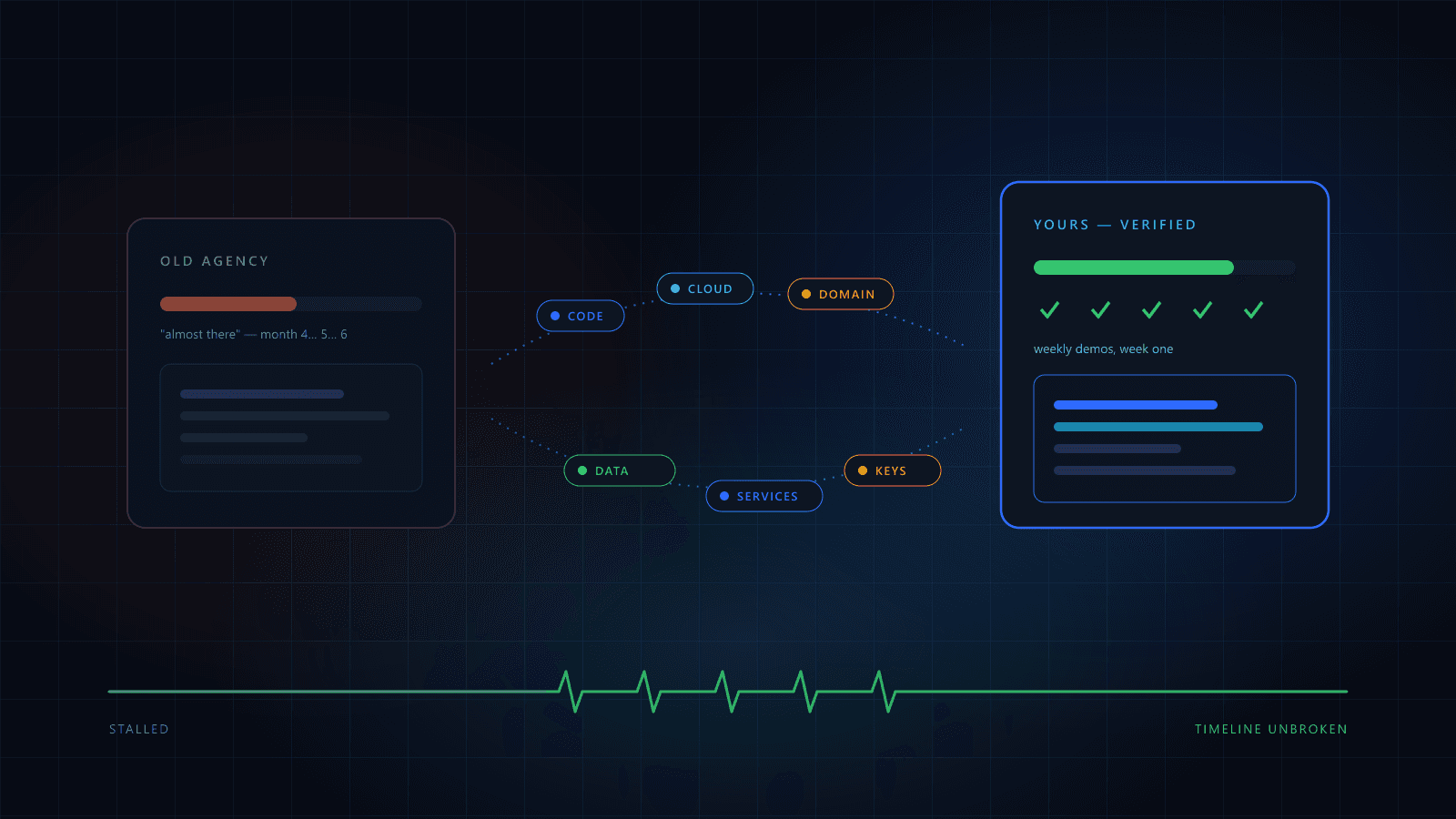
By the time a founder starts quietly searching "how to switch development agencies," the decision is usually already made. What keeps them in the engagement for another three, four, six months isn't hope — it's the transition itself. Leaving looks riskier than staying, even when staying means paying every month for a build that has visibly stalled. The code lives in their repos. The cloud account is in their name. The one person who understands the deploy process is on their payroll. Walking away feels like walking away from your own product.
That fear is doing a lot of unearned work. The risk of switching is real, but it's front-loaded and mostly fixable in advance — while the cost of staying is monthly and compounding. This post is about doing the fixing before you make the call.
Why founders stay too long
Nobody plans to be a hostage. It happens by default, one reasonable-sounding convenience at a time: the agency sets up the cloud account because they're doing the DevOps anyway. The repos live in their organization because that's how their access control works. The domain gets registered under the account of whoever was in a hurry that day. The third-party services — payments, email, analytics, error tracking — accumulate under logins nobody wrote down.
None of this is sinister, and that's exactly the problem. Sinister you'd notice. This is just the sediment of an engagement where ownership was never written down — and every month it builds, the perceived cost of leaving grows with it. The founder who feels trapped usually isn't trapped by contract. They're trapped by operational gravity.
Here's the reframe that matters: your contract saying you own the IP and your product actually being in your hands are two different facts. The first is a legal position. The second is a checklist. You can fix the second one quietly, this week, without announcing anything.
First, take inventory — quietly
Before any conversation about leaving, run one test: if the agency vanished tonight, could you deploy tomorrow? Not "would you win the dispute" — could you, operationally, ship a fix to production without a single person from their team answering a message?
For most founders in a stalled engagement, the honest answer is no. Closing that gap means verifying — not asking about, verifying, by logging in yourself — each of these:
- Source code. The repositories live in an organization you own, and your account is the owner — not a collaborator someone can remove. A zip file emailed to you is not ownership; the repo, its history, and its access control are.
- Cloud and hosting. The root account — the one that controls billing and can delete everything else — is yours. Agency engineers should be members you can revoke, not the other way around.
- Domains and DNS. Registered under your account, renewing on your card. A product whose domain sits in someone else's registrar account is one lapsed relationship away from going dark.
- Third-party services. Payments, transactional email, analytics, error tracking, app-store accounts. Each one: whose login, whose billing card, and can you rotate the credentials yourself?
- Data. You can access the production database, and a recent backup exists somewhere the agency cannot touch. The backup you haven't verified is a hope, not a backup.
- Credentials and configuration. The environment variables, API keys, and deploy steps exist in writing, somewhere you control — not solely in one engineer's shell history.
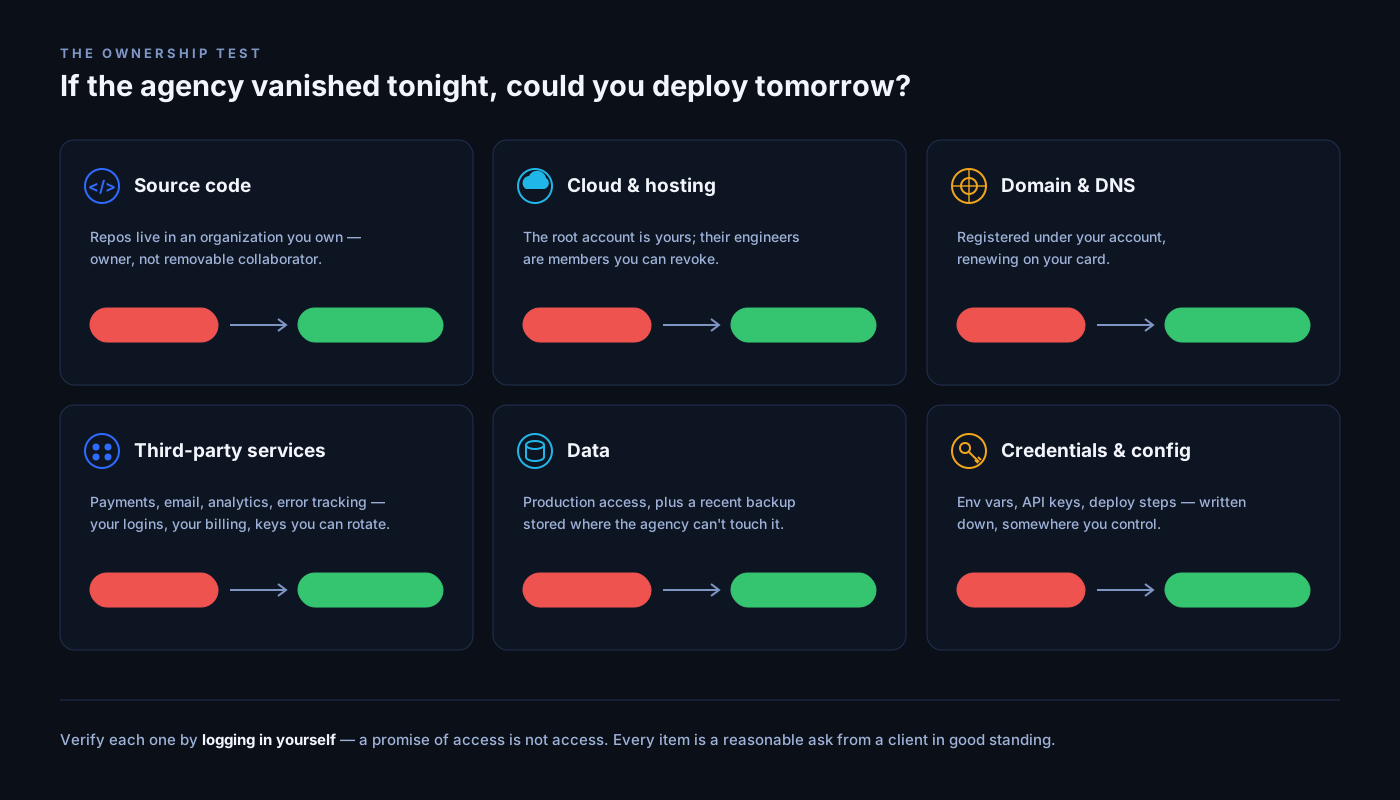
Two useful properties of this list. First, every item on it is a reasonable ask from a client in good standing — "we're tightening up our ownership and continuity posture" is true, professional, and requires no confrontation. Second, how the agency responds is itself information. A healthy partner transfers ownership in a day and thinks nothing of it. Friction, delay, or "you don't need to worry about that" tells you the engagement was more fragile than you knew — and you've learned it while you still hold the leverage of being a paying client.
The notice period is not a handover
The standard exit script goes: give notice, negotiate a "knowledge transfer period," receive documentation, part ways. It sounds orderly. It mostly doesn't work, for a reason that has nothing to do with bad faith: the moment you give notice, the incentives flip. Your project stops being a relationship to invest in and becomes a commitment to wind down. The senior people quietly rotate to accounts with a future. The documentation you're promised gets written in the final two weeks, by whoever is left, describing a system they didn't build.
And the deeper flaw: knowledge transfer to whom? If the receiving team isn't in the room yet, "KT sessions" are a performance with no audience — slide decks summarizing code that the people who'll actually inherit it have never seen. The knowledge that determines whether your timeline survives the switch isn't in the README anyway. It's the decision history: why the schema bends around that one client's data, which third-party integration is load-bearing, which module everyone was afraid to touch. That knowledge transfers through questions asked by engineers who are reading the code while the people who wrote it are still reachable — or it doesn't transfer at all.
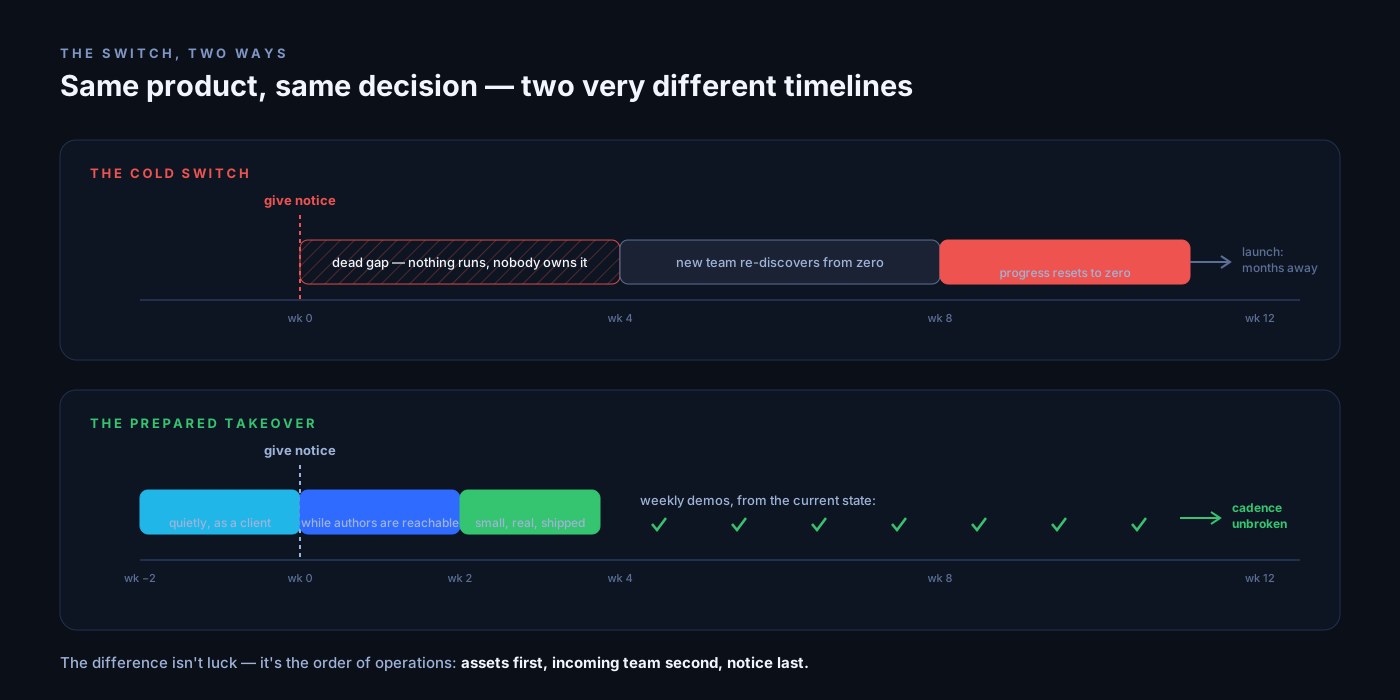
The practical order of operations follows directly: secure the assets first, engage the incoming team second, and give notice last — so that whatever cooperation the notice period produces lands on a team that's already inside the codebase, asking specific questions while there's still someone to answer them.
What a real takeover looks like
The naive switch has a shape you can draw: announce, endure a gap while nothing runs and nobody owns anything, hand the code to a new agency, and receive the verdict we've written about before — "honestly, it'd be faster to rebuild." The timeline resets to zero, and you pay a second time for everything the first build already taught.
A prepared takeover has a different shape:
- It starts with reading, not quoting. A team worth handing your product to insists on a Build Audit before it commits to numbers — one to two weeks inside the actual codebase, ending in a component-by-component verdict you own. Anyone who quotes the takeover without reading the code is guessing, and you've been on the receiving end of that guess before.
- It ships something small, early. The first proof of a working takeover isn't a plan — it's a deploy. A small fix or feature through the full pipeline in the first two weeks proves the new team can actually operate your product, not just opine on it.
- It re-establishes cadence immediately. The weekly demo starts from the current state of the product — week one, not after some future re-architecture. Cadence is what makes the transition legible: you can see, every seven days, that the build is moving again.
This isn't hypothetical for us. Narix Labs' founding engagement is exactly this motion: inheriting a mid-build product from a previous agency and carrying it to completion — without resetting the timeline, while cutting the monthly run-rate by roughly 30% and increasing the pace of shipping. Most agencies avoid inherited codebases; the slot is underserved precisely because continuity is hard. But it's a skill, not a miracle — and the founder's preparation is half of it.
Where this fits
If you've read the earlier pieces, you'll recognize the ladder. The Build Audit is the front door for existing code — the same job discovery does for ideas: convert uncertainty into a written verdict you own before anyone signs anything large. The audit feeds Planning, the Build delivers in weekly demos, and Care keeps it healthy after launch. A takeover isn't a special case of that ladder. It's the same ladder, entered mid-flight — which is why the audit-first rule matters most exactly when a transition is on the table.
The short version
Founders stay in stalled engagements not out of loyalty but because leaving feels like losing the product — and that feeling is mostly a checklist wearing a costume. Verify the six assets while you're still a client in good standing: code, cloud, domain, services, data, credentials. Line up the incoming team before you give notice, so knowledge transfers through engineers reading real code, not farewell slide decks. And insist that whoever inherits the build reads it before quoting it — an audit first, a small deploy early, weekly demos from week one.
The switch you've prepared for is smaller than the stall you're paying for. If you're somewhere in that decision right now, the Build Audit is built for exactly this moment — or start with the product readiness assessment, which takes a few minutes and tells you how much of the checklist you already control.
Not sure where your product stands?
Take the free Product Readiness Assessment — ten minutes, and you'll know exactly what to fix first.