

July 7, 2026 · 6 min read
Why Product Discovery Matters: The Two Weeks That Decide Your Whole Build
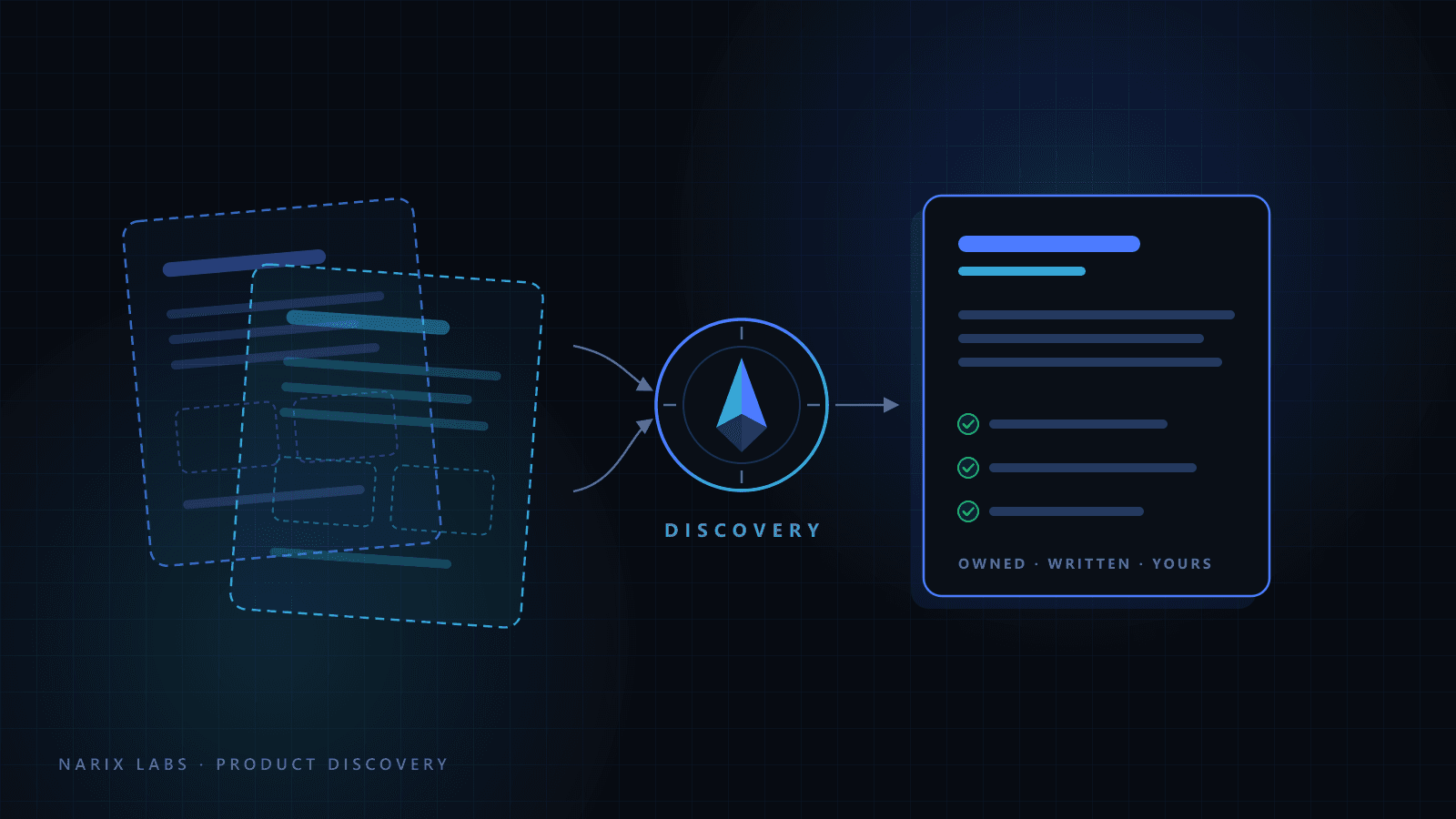
Most software builds don't fail in month six. They fail in week zero — at the moment a contract gets signed on top of two different mental models of the same product. The founder pictures one thing. The build team pictures something adjacent. Nobody writes either picture down, so nobody notices the gap. Then the gap surfaces, months later, as change requests, scope fights, and a budget that stopped making sense.
Product discovery exists to close that gap before anyone commits money to a build. It's the least glamorous phase of building software, and it's also the highest-leverage one — because it's the only phase where changing your mind is still cheap.
The most expensive assumption in software
Here's the uncomfortable pattern we see over and over: a founder arrives with an idea and a budget, and every agency they talk to wants them to sign for the whole build. The quote arrives fast — sometimes suspiciously fast — and it's built on maybe two calls and a slide deck.
Think about what that quote actually encodes. It's a fixed number attached to a product that exists only in two heads, described in a language (conversation) that's famously lossy. Every ambiguity in that conversation becomes a decision someone makes later, unilaterally, under deadline pressure. And in a fixed-bid contract, every one of those decisions that goes against your picture of the product becomes a change request — billed to you.
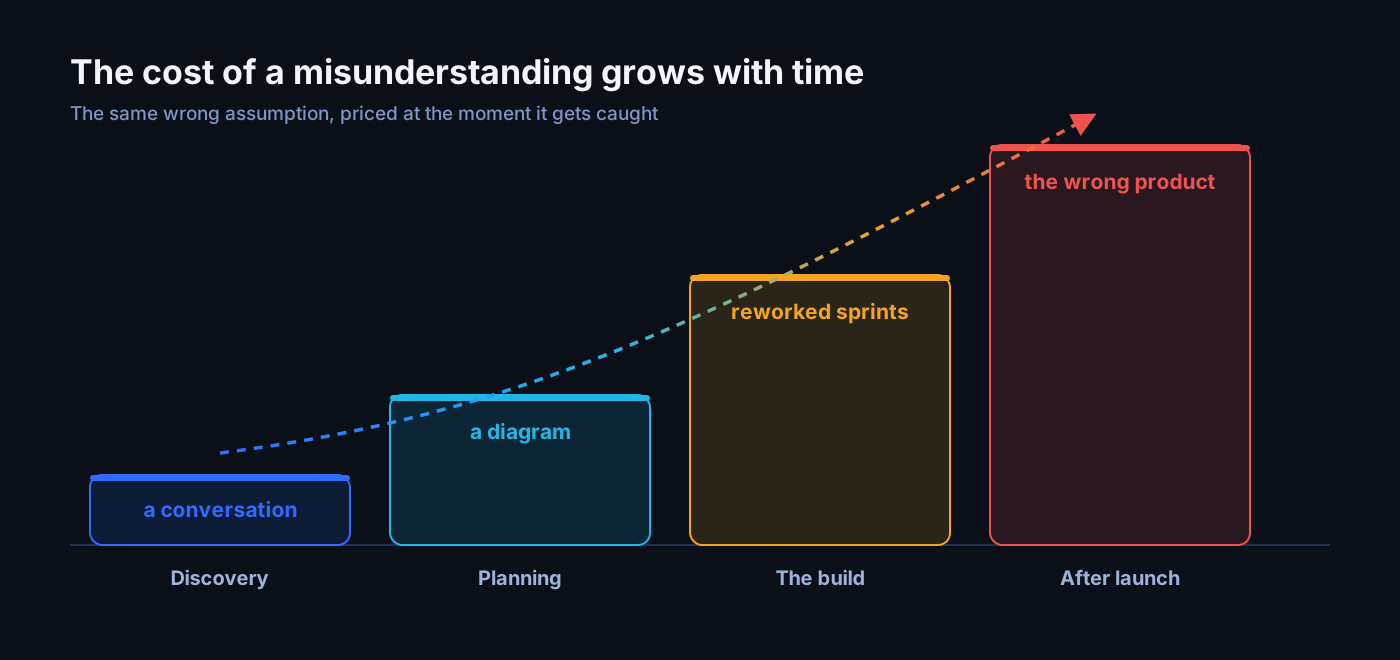
The cost of a misunderstanding grows with time:
- In discovery, a wrong assumption costs a conversation. You talk it through, rewrite a paragraph, move on.
- In planning, it costs a diagram. The architecture shifts before anyone has built on it.
- In the build, it costs sprints. Working code gets reworked, timelines slip, trust erodes.
- After launch, it costs the product. You've shipped the wrong thing well.
Discovery is where you buy your mistakes at their lowest possible price.
What product discovery actually is
Discovery is a short, structured engagement — ours runs one to two weeks — that answers two questions in writing:
- What exactly are you building? Not the pitch-deck version. The written-down version: the problem, the users, the core capabilities, and the explicit line between what version one includes and what it doesn't.
- Should you build it? An honest feasibility verdict from people who ship software: buildable as-is, buildable with changes, or rethink — with the technical realities spelled out before you spend.
Notice what's not on that list: architecture diagrams, database schemas, UI prototypes, committed timelines. Those belong to planning — designing how — and doing them before you've settled what and whether is how teams end up with beautifully engineered answers to the wrong question.
Good discovery produces documents, not vibes. Coming out of a discovery sprint you should be holding:
- A product definition brief — your idea written back to you in someone else's words. If the write-back is wrong, you just caught the misunderstanding for the price of a conversation instead of a rebuild.
- A lean requirements summary — functional capabilities and the non-functional needs (security, compliance, scale) at the level a build team can actually price from.
- A feasibility read — the honest technical verdict, including the parts you might not want to hear.
- An MVP scope recommendation — the minimum meaningful first version, with an explicit in-scope / out-of-scope / later line. The discipline isn't cutting features; it's sequencing them so version one proves the thesis instead of chasing it.
- A tentative roadmap and an indicative budget band — a real sequence and a realistic range, explicitly framed as firming up after planning. Not a teaser quote.
The test of real discovery: you own the output
There's a simple way to tell discovery done for you from discovery done to you: ask who owns the documents, and whether they'd survive contact with a different build team.
If the answer is "well, it all leads into our proposal," you didn't buy discovery — you sat through a sales process with extra steps. Real discovery produces artifacts written to be usable by any competent team. That portability isn't a nice-to-have; it's the whole mechanism of trust. A definition you could take elsewhere is the only kind you can rely on, because it can't smuggle in lock-in.
This is also why we think discovery should be paid, even though plenty of agencies offer it free. Free discovery is a sales motion — its job is to reach a signed build contract, which is exactly why you can't trust its conclusions. Nobody funds weeks of unpaid work to tell you not to build. A paid sprint flips the incentive: you're buying the verdict, not the pitch, and "don't build this — here's why, and here's what would have to change" becomes an economically acceptable answer. Sometimes it's the most valuable one you can get.
"But discovery slows us down"
The most common objection, and the most understandable one. You've got conviction, maybe funding, definitely urgency — and someone's proposing two weeks of talking?
Three things worth weighing against that instinct:
Discovery is fast compared to what it prevents. One to two weeks against months of building toward a misunderstanding. The teams that skip discovery don't actually skip it — they do it anyway, involuntarily, mid-build, at build prices, in the form of reworked sprints and renegotiated scope.
Discovery is how you evaluate the quote you already have. If you're holding a build estimate you can't tell is honest, a written definition and an independent feasibility read are your negotiating leverage — with anyone, including the team that gave you the quote.
Speed without direction isn't velocity. Shipping in weeks only matters if you're shipping the right thing. The point of a discovery phase isn't to slow the build down; it's to make sure the fast part is pointed somewhere worth going.
Where discovery fits in a sane delivery sequence
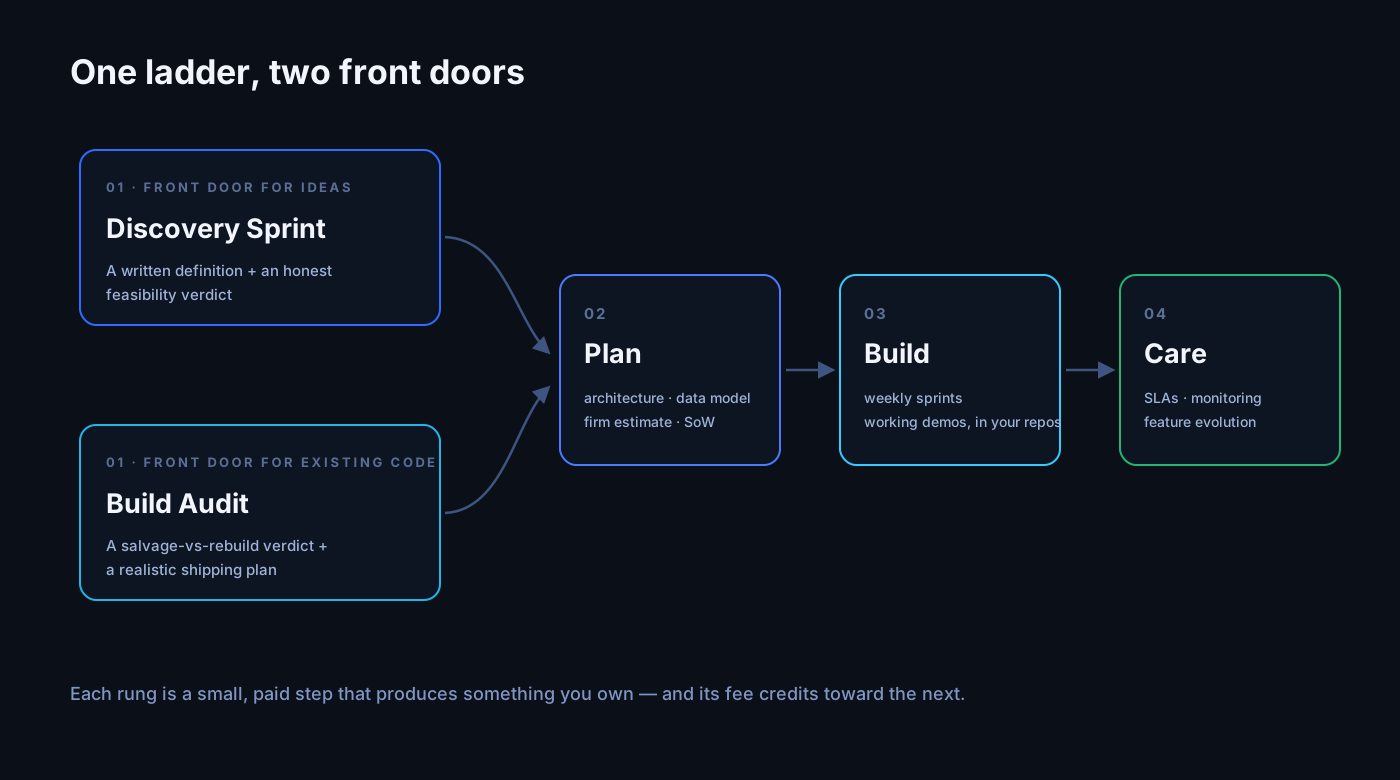
Discovery isn't a standalone ritual — it's the first rung of a ladder where each step de-risks the next:
- Discovery settles what and whether: the definition, the verdict, the MVP scope.
- Planning designs how: architecture, data model, user journeys, and an estimate with real confidence behind it — because it's built bottom-up from a design, not top-down from a sales target.
- Build delivers the plan in weekly sprints, with working demos instead of status decks.
- Care keeps the product healthy and evolving after launch.
The sequence matters because each stage makes the next one's commitments honest. Estimates quoted after planning are credible in a way that estimates quoted after two sales calls simply cannot be. And builds fail in familiar ways — the quote was a guess, the agency's picture of the product wasn't yours, progress hid behind decks until it was too late. Every one of those failures traces back to a skipped step before the build.
Already have code rather than an idea? The same logic applies through a different front door: a Build Audit does for a stalled codebase what discovery does for a concept — an honest, written verdict before more money goes in.
The short version
Before you sign a build contract of any size, you should be able to point at a written document — one you own — that states what the product is, who it's for, what version one contains, and whether it's technically feasible within your budget. If you can't, the money you're about to spend is resting on a conversation.
Discovery is how that document gets written. It's one to two weeks that decide whether the next six months compound or unravel.
If you're at that stage, our Discovery Sprint is built for exactly this — or take the two-minute product readiness assessment and see where you actually stand before talking to anyone.
Not sure where your product stands?
Take the free Product Readiness Assessment — ten minutes, and you'll know exactly what to fix first.